
When planning a move to a new city, the biggest headache is often not a lack of information, but rather the fragmented nature of that information. Checking the weather requires consulting weather stations, calculating rent necessitates browsing real estate agencies, and the impressionistic descriptions on social media often obscure the true cost of living. In this context of information asymmetry, making hasty decisions can easily lead to a lower-than-expected quality of life after relocation.
Why There WhyThere is a city comparison tool designed to address this pain point. It's not a traditional travel guide or real estate referral page, but a pure data dashboard. By integrating key indicators such as climate patterns, cost of living, and sunshine hours of different cities into a single dimension, WhyThere helps users quickly and objectively filter cities before moving.
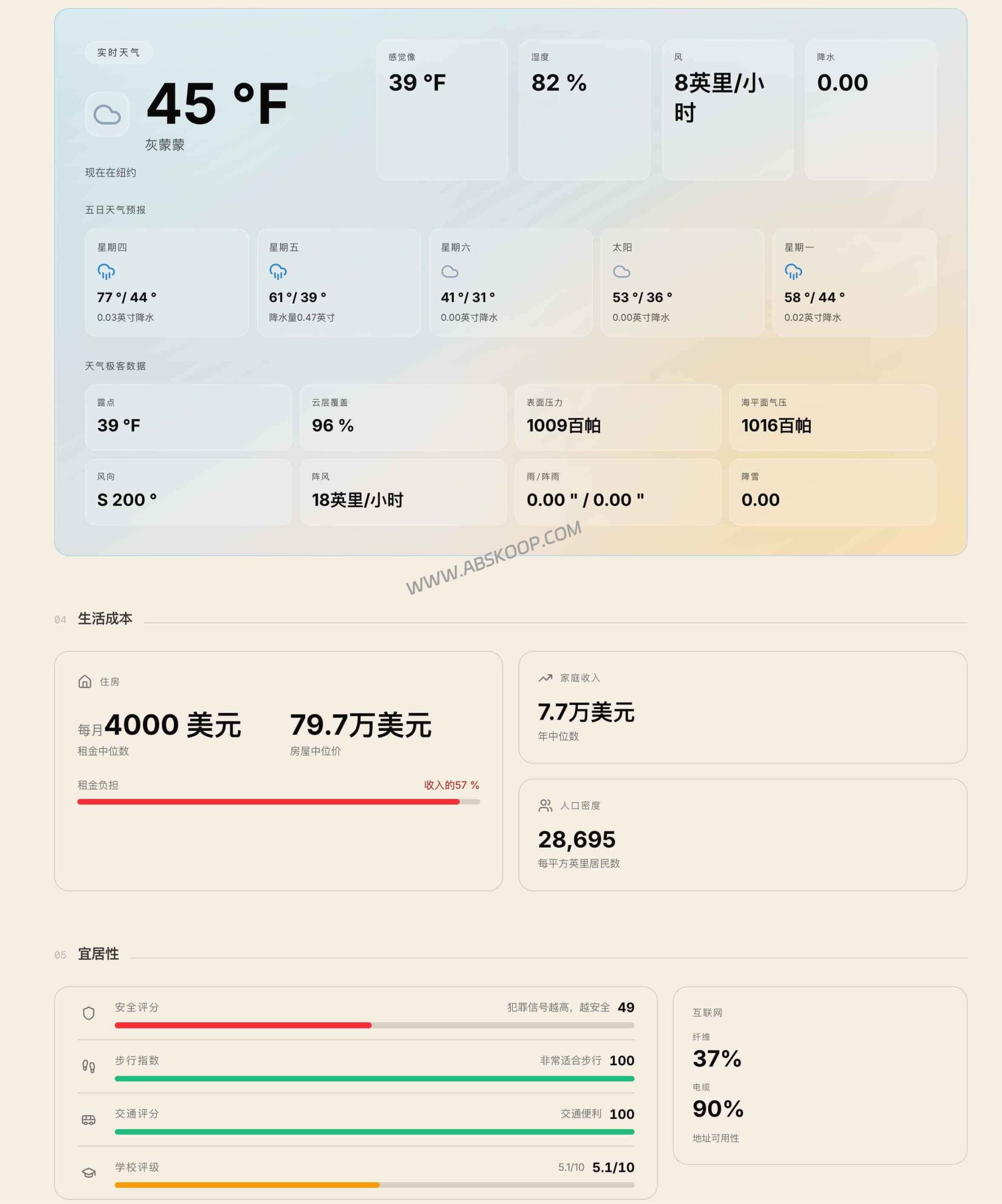
Unlike those emotional descriptions that pile up labels like "livable," WhyThere's logic is extremely pragmatic:Quantifying differences with dataIt aims to answer a core question: How much of a premium do you need to pay to get ideal weather?
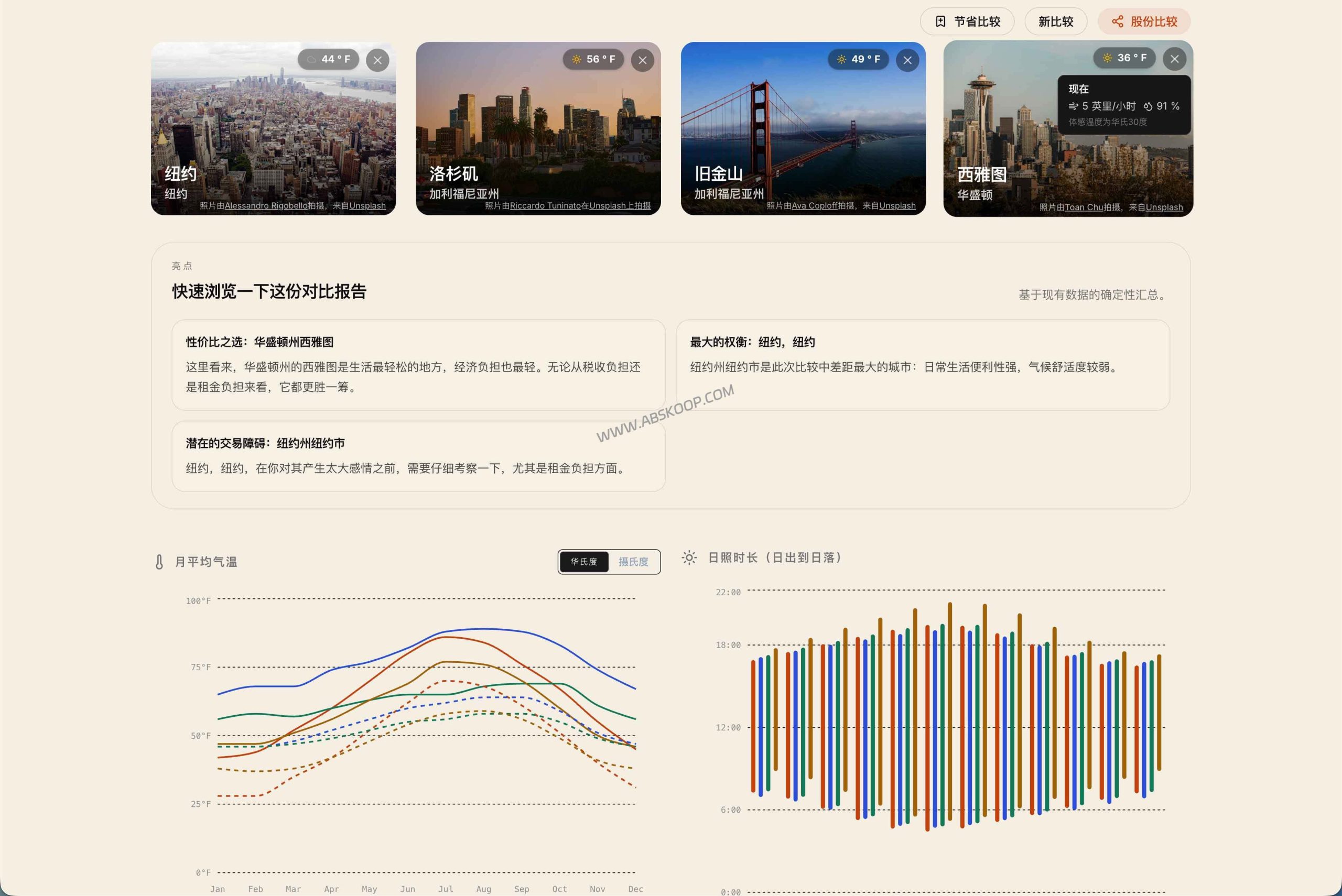
Multi-dimensional data cross-comparison
WhyThere's analysis goes far beyond a simple "annual average temperature." Meteorological dimensionIt focuses on analyzing sunshine duration, precipitation patterns, humidity, and extreme weather risks. These indicators directly determine the perceived quality of life for long-term residents—for example, prolonged periods of overcast skies or extreme heat have a far greater impact on quality of life than average temperature variations.
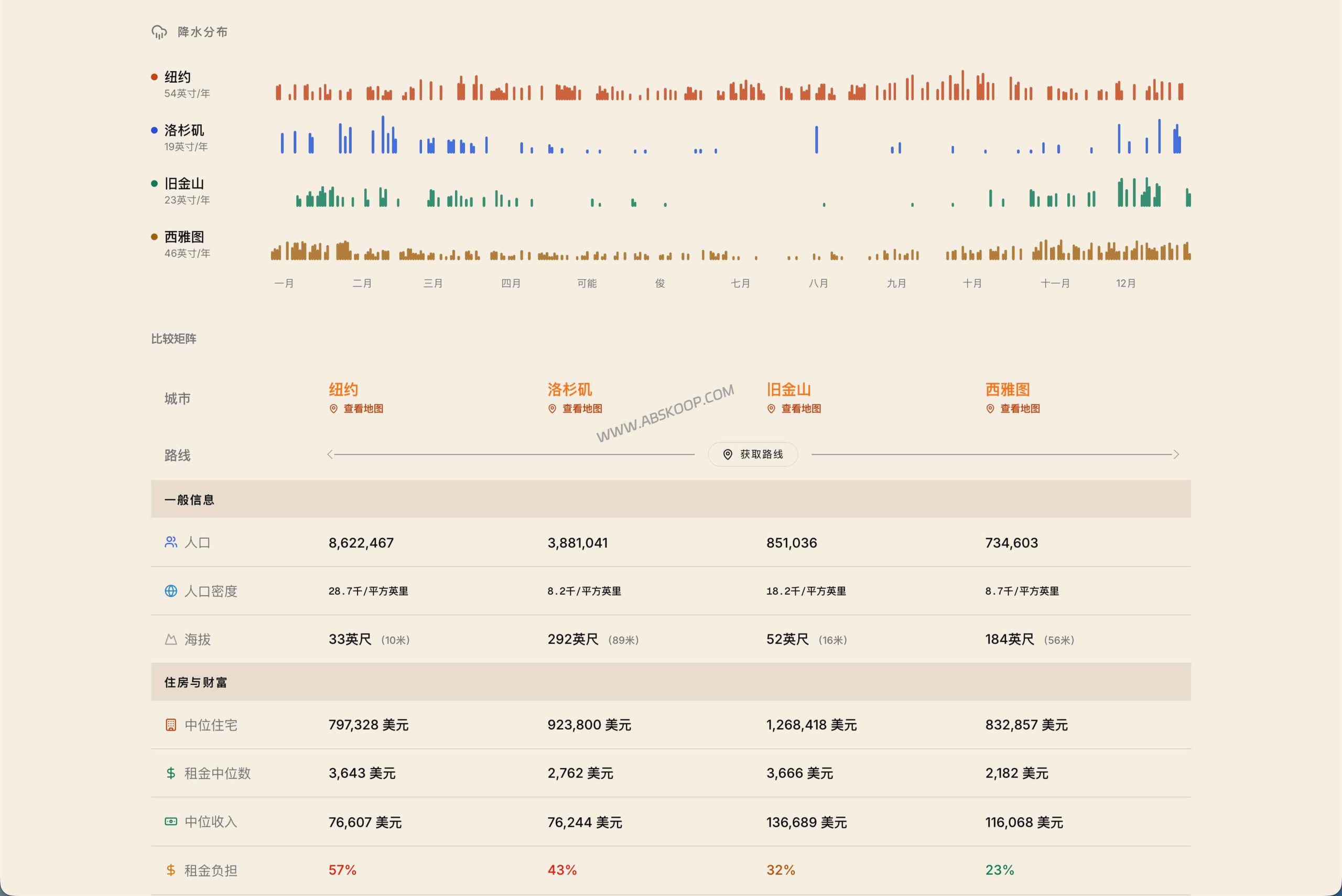
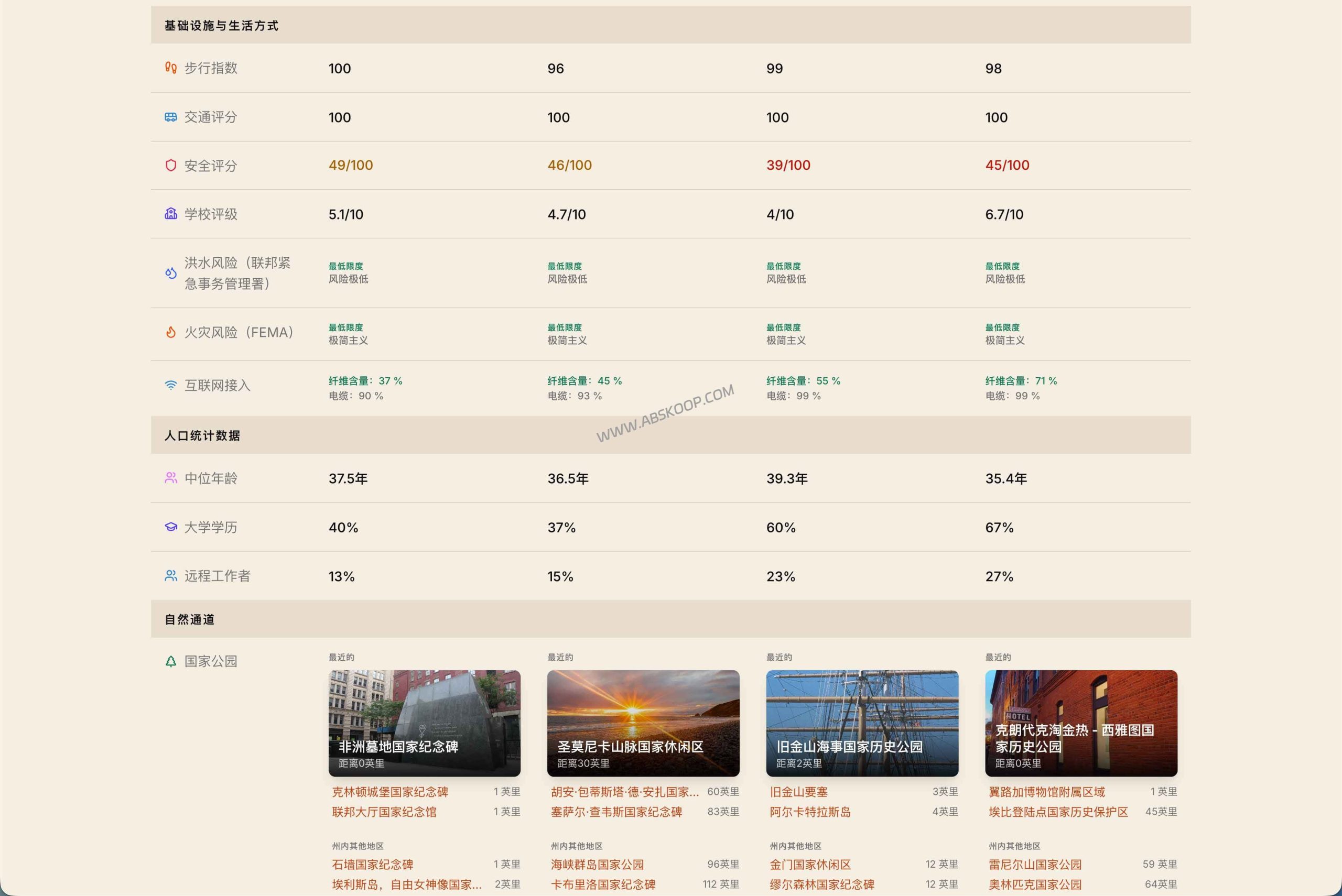
在 Cost of living dimensionThis tool overlays rent and house prices with indicators such as local income levels and walkability index. This cross-comparison can reveal hidden truths: low rent does not necessarily mean low expenses, and good weather is often accompanied by high living costs. Only by comparing within the same framework can you see whether a city is helping you save money or increasing your expenses in another way.
Core Functions and Data Transparency
- Quantifying “Sun Tax”: There is a dedicated analysis that directly calculates the residential premium that must be paid for a better climate.
- Authoritative data source: Access to public databases such as Open-Meteo, Zillow, and Numbeo ensures the objectivity of the basic data.
- Independent stance: The official statement says it does not accept paid recommendations from real estate agents or tourism bureaus, maintaining the tool's purely reference-oriented nature.
How to use WhyThere efficiently
- Initial screening: Input candidate cities into the tool, and the tool will quickly eliminate options with "fatal flaws" (such as extremely unsuitable climate or costs far exceeding the budget) based on data.
- Quantitative comparison: Focus on observing the ratio of sunlight exposure, costs, and revenue to determine the region with the highest cost-effectiveness.
- In-depth research: After narrowing down the scope, targeted research was conducted on details that are difficult to cover with general data, such as school districts, community security, and specific tax burdens.
- On-site inspection: The data conclusions were used as a reference for final field verification.
Applicable Scenarios and Limitations
Recommended audience: People preparing to relocate across state lines within the United States, and remote workers (Digital Nomads) who need to consider both climate and budget.
Precautions:
- Geographical focus: Currently, the core user experience focuses on US cities, with lower coverage of fields for non-US cities.
- Timeliness: Some publicly available data has an update cycle, so it is recommended to use the results as a trend reference rather than absolute values.
- position: It is an efficient "first-round screener" but cannot replace in-depth local research and field visits.
Competitive Comparison: WhyThere vs Nomad List vs Numbeo
The three have distinct positioning:
- Nomad List: It focuses on the digital nomad ecosystem, paying attention to internet speed, visa policies, and community atmosphere.
- Numbeo: It focuses on a crowdsourced pricing database, providing extremely granular data on daily food, water, and electricity expenses.
- WhyThere: Focus on Comprehensive framework comparisonIts advantage lies in integrating climate, sunshine, and cost, making it suitable for use during the macro-level decision-making stage of deciding "which city to move to."
In short, WhyThere's value lies in helping you put all your candidate cities on the same table for a clear comparison. Before discussing sentiment and lifestyle, let's use data to get the facts straight.
👉 Further Reading:Nomad List- 数字游民最佳居住城市指南
Project acquisition and official channels
🧭 Start browsing city comparisons Compare climate, sunshine, and cost of living in different cities
Disclaimer:This article's introduction to the WhyThere tool is for technical learning and informational reference only. The real estate data and meteorological indicators mentioned are geographically limited and affected by macroeconomic factors; please refer to the official information on the current page and local conditions. This website assumes no legal or financial responsibility for substantive decisions involving home purchases, visas, or long-term settlement.
