The most tiring part of planning a trip is often not booking flights and hotels, but rather integrating fragmented information.
Switching between apps frequently to check the weather, compare prices, plan routes, and calculate budgets is extremely inefficient.TripStar The core goal is to transform these tedious manual search processes into a visual itinerary plan that can be directly viewed and dynamically modified.
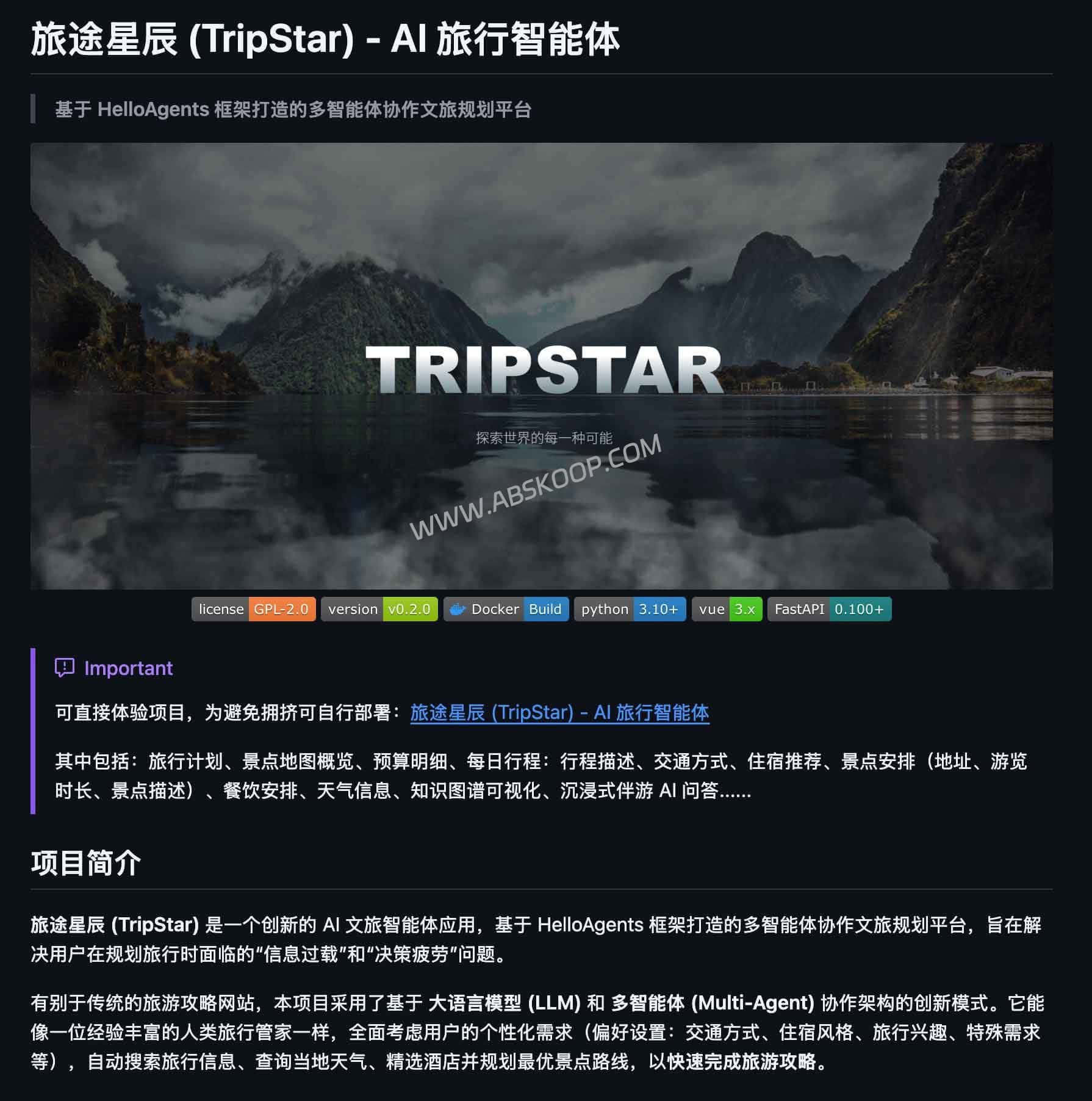
TripStar is a software built on the HelloAgents framework. Open source AI travel planning toolIt goes beyond simple "conversational Q&A" or "long-form travel guide" models, and integrates attraction selection, route optimization, budget preparation and map visualization through a multi-agent collaborative process.

From "generating content" to "making the workflow work"
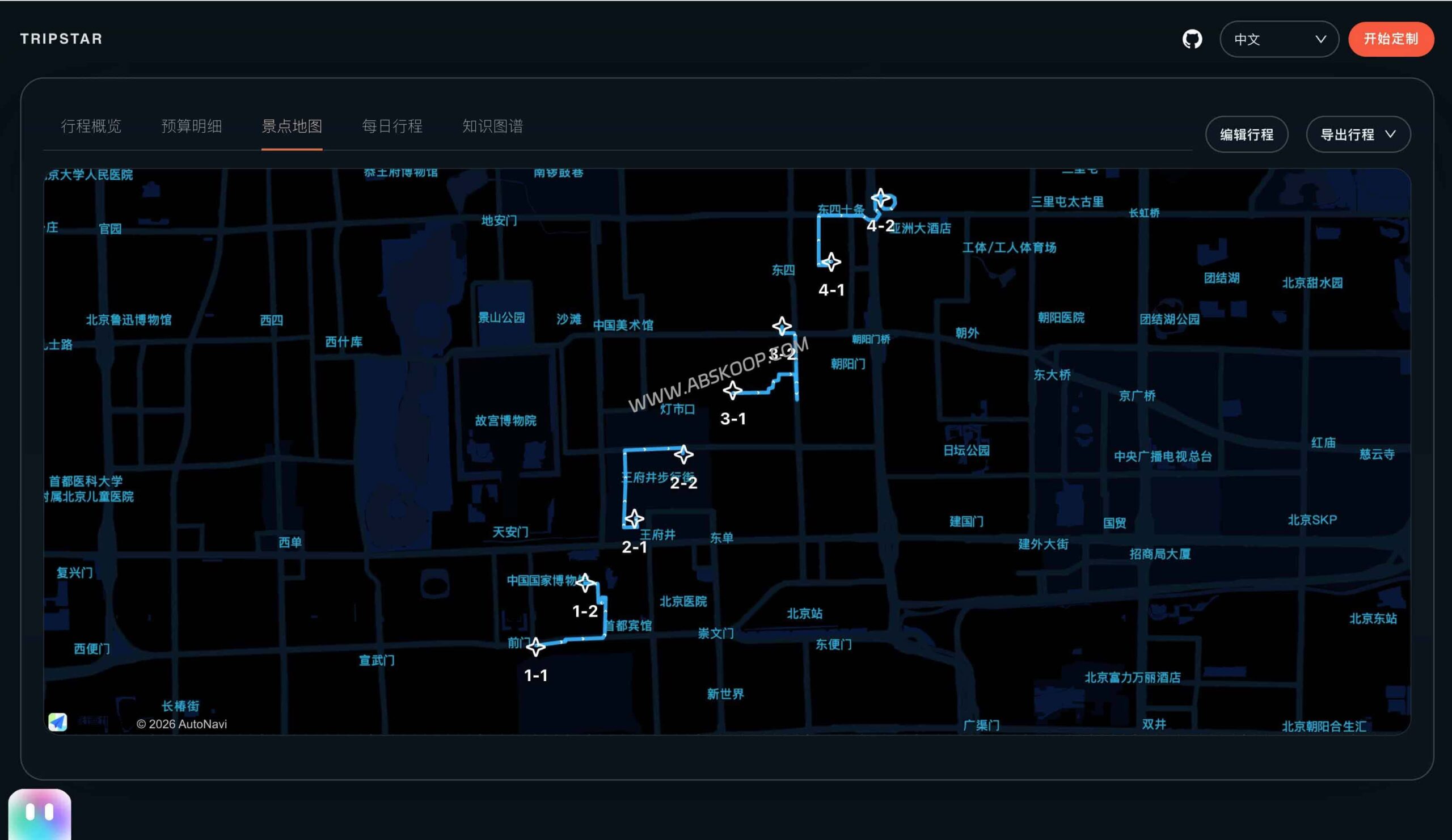
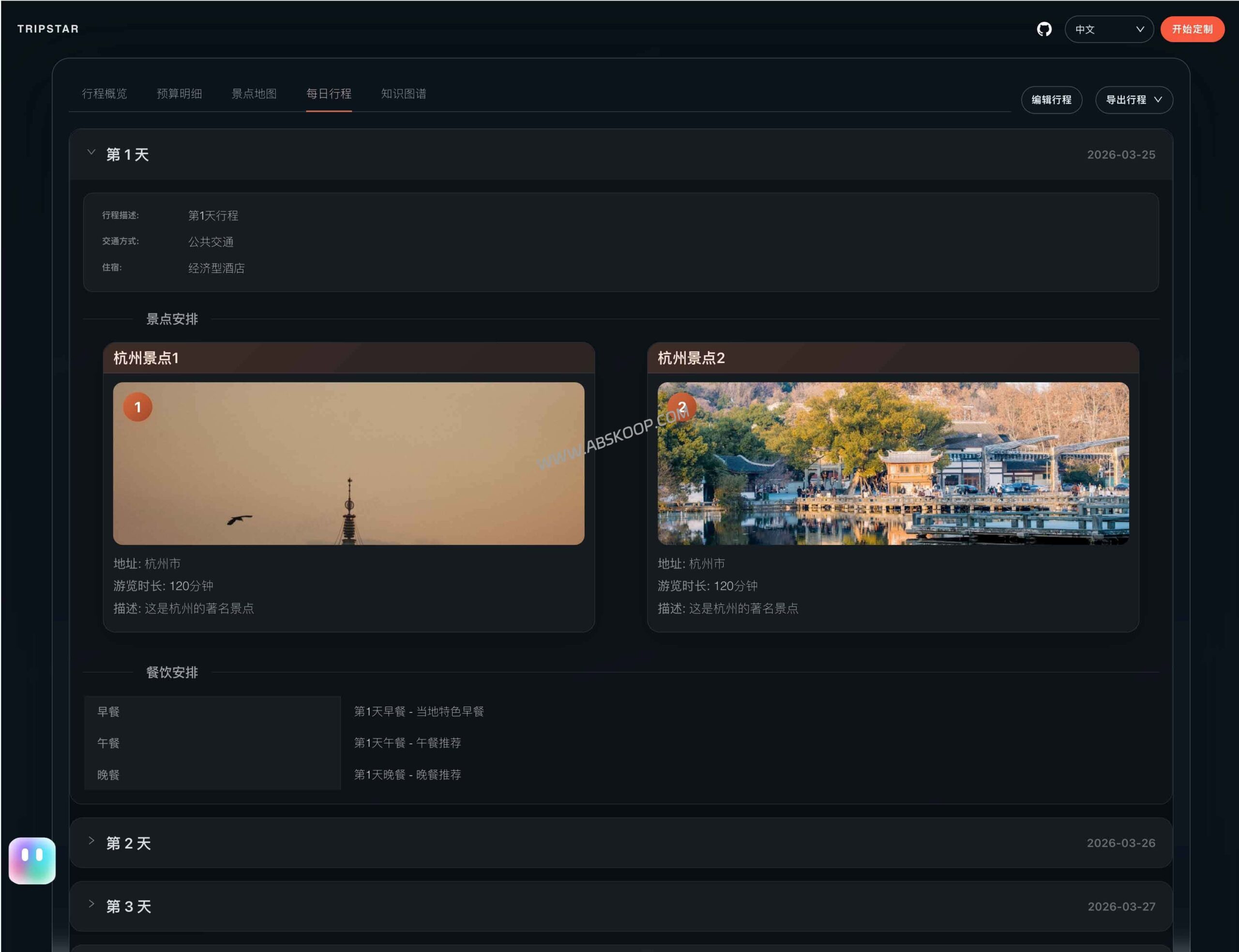
TripStar's core competitiveness lies in its task decomposition mechanism. After receiving a request, the master agent distributes the task to different specialized roles: a dedicated agent is responsible for optimizing routes using Amap (Gaode Maps) (to avoid backtracking), another agent monitors the weather, and a budget agent filters accommodations. Finally, the system aggregates the results from all parties and renders them on the front end as a map containing real latitude and longitude lines, a daily itinerary, and categorized budget details.
In terms of technical implementation, this project (Vue + FastAPI) adopts a very pragmatic engineering design: to solve the 504 gateway timeout problem caused by large model long text inference, TripStar introduced... Asynchronous polling mechanismThe front end uses... task_id Instead of synchronously waiting for a backend response, the status is retrieved asynchronously. This design is highly valuable for any self-deployed project that heavily relies on LLM outputs.
Deployment Environment and API Configuration Guide
💻 Key Configuration Points
- LLM model requirements: It must use an OpenAI-compatible format and Supports structured output (JSON format)The model must be optimized; otherwise, backend parsing will frequently fail. It is recommended to use a lower-cost domestic model for testing.
- Gaode Map Dual Key Verification: Two types of keys need to be configured: the "Web Service" key is used for backend data queries, and the "Web Client (JS API)" key is used for frontend rendering. And it must be...
index.htmlInjectionsecurityJsCodeA security key is required; otherwise, the map cannot be loaded. - Image resources: The images of tourist attractions rely on the Unsplash API, and a free quota needs to be applied for in the developer backend before deployment.
Applicable Scenarios and Risk Warnings
Recommended audience: Users who prefer AI-automated travel guides, as well as developers researching cultural tourism agents and multi-agent collaborative solutions.
limitation: Currently, it mainly supports Domestic travel scenariosComplex cross-border, multi-country travel is not currently supported. For users who do not wish to disrupt their environment, we recommend using online AI tools directly.
Commercialization warning: Although the code is open source, the project heavily relies on the APIs of LLM, Amap, and Unsplash. If you plan to perform secondary development or convert it into a SaaS product, please be sure to check the concurrency limits and commercial licensing agreements of each interface to avoid compliance risks or exceeding limits after launch.
Resource Acquisition
🐙 Magic Dash Community Online Trial Version No deployment required, just run the demo to experience it.
Disclaimer: This article is based on a publicly available README and is for technical research reference only. Please comply with open-source licenses and third-party API licenses when deploying. The AI-generated itinerary is for assistance only; please verify real-time information such as road conditions, ticket availability, and business hours before your actual trip.
