From "Gacha" to "Programming": Stabilizing AI Images with Structured Prompts
Many AI automation users often face a core pain point when trying to generate images in batches:Too much randomnessPrompts written in natural language (plain language) often lead to huge fluctuations in AI output—one day the style is consistent, but the next day it's completely different. This uncertainty makes it impossible for AI to be truly efficient in integrating with automated posting scripts or large-scale production workflows.
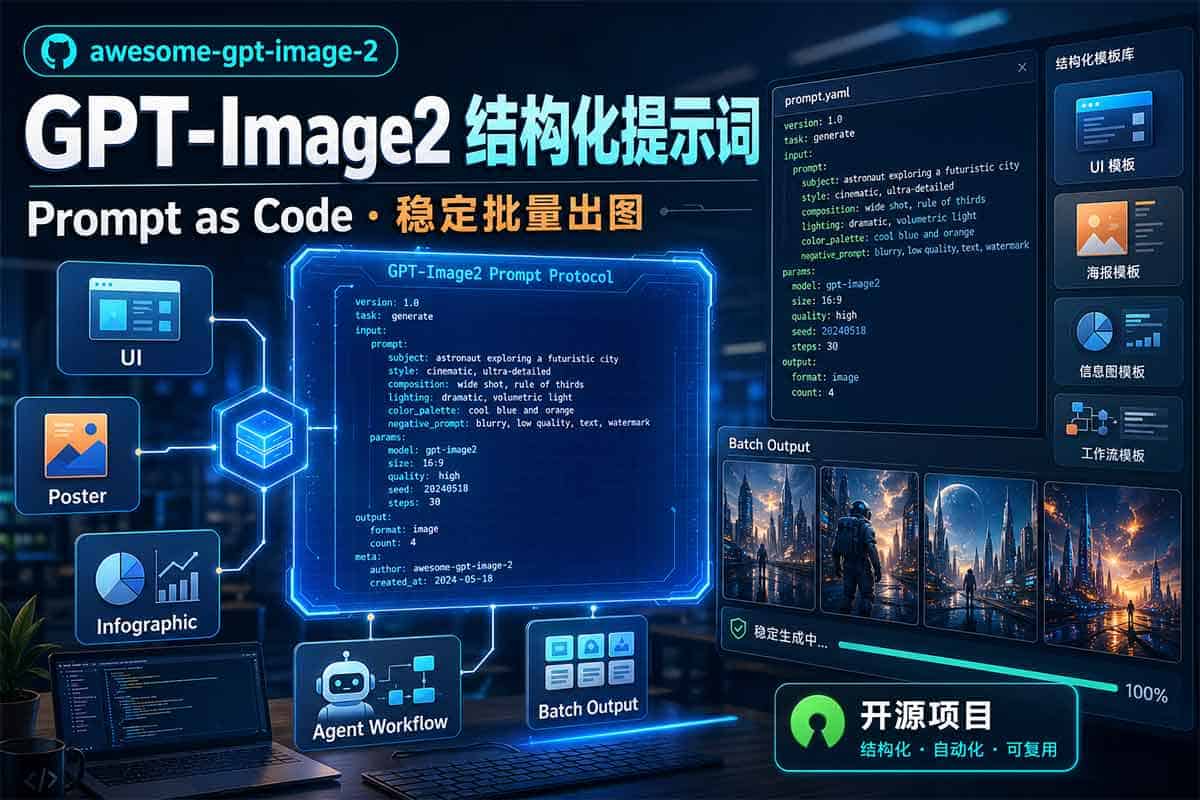
awesome-gpt-image-2 It's not just a simple AI image repository, but a reference framework that "structures and formalizes" prompts. By treating Prompts as a kind of "protocol" or "code," it aims to reduce the randomness of image output through standardized parameter passing, making AI visual output predictable and repeatable.
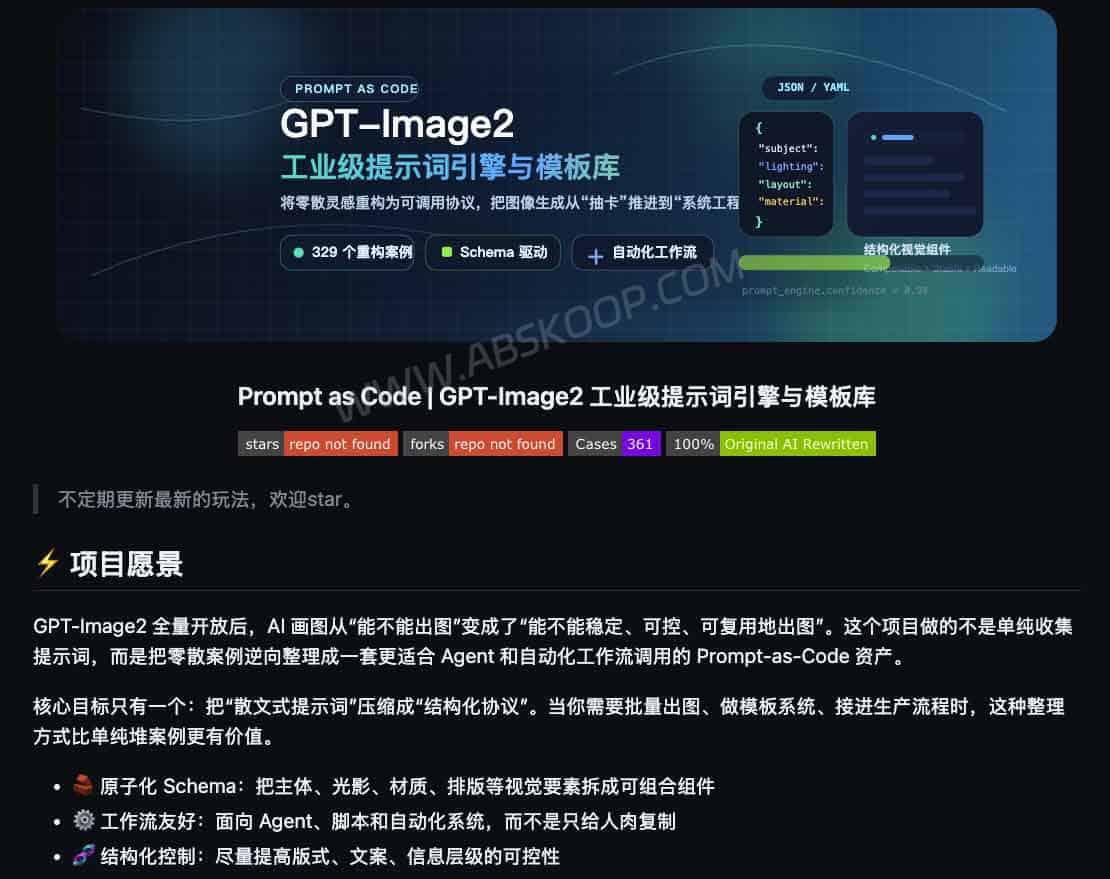
This project, based on the open-source GPT-Image2 from GitHub, reverse-engineered hundreds of cases, transforming specific scenarios such as UI interfaces, infographics, and posters into structured protocols. "Prompt as Code" The approach breaks down the screen into distinct variables such as subject, material, lighting, and information hierarchy, transforming the prompts from "emotional descriptions" to "parameter filling," greatly improving its compatibility with agents or automated scripts.
Structured protocols vs. traditional prompt word sets
Most word suggestion collections on the market tend to be "vocabulary stuffing," guiding users to use multiple words in a stacked manner. "4K, cinematic feel, cyberpunk" Try your luck with strong modifiers.
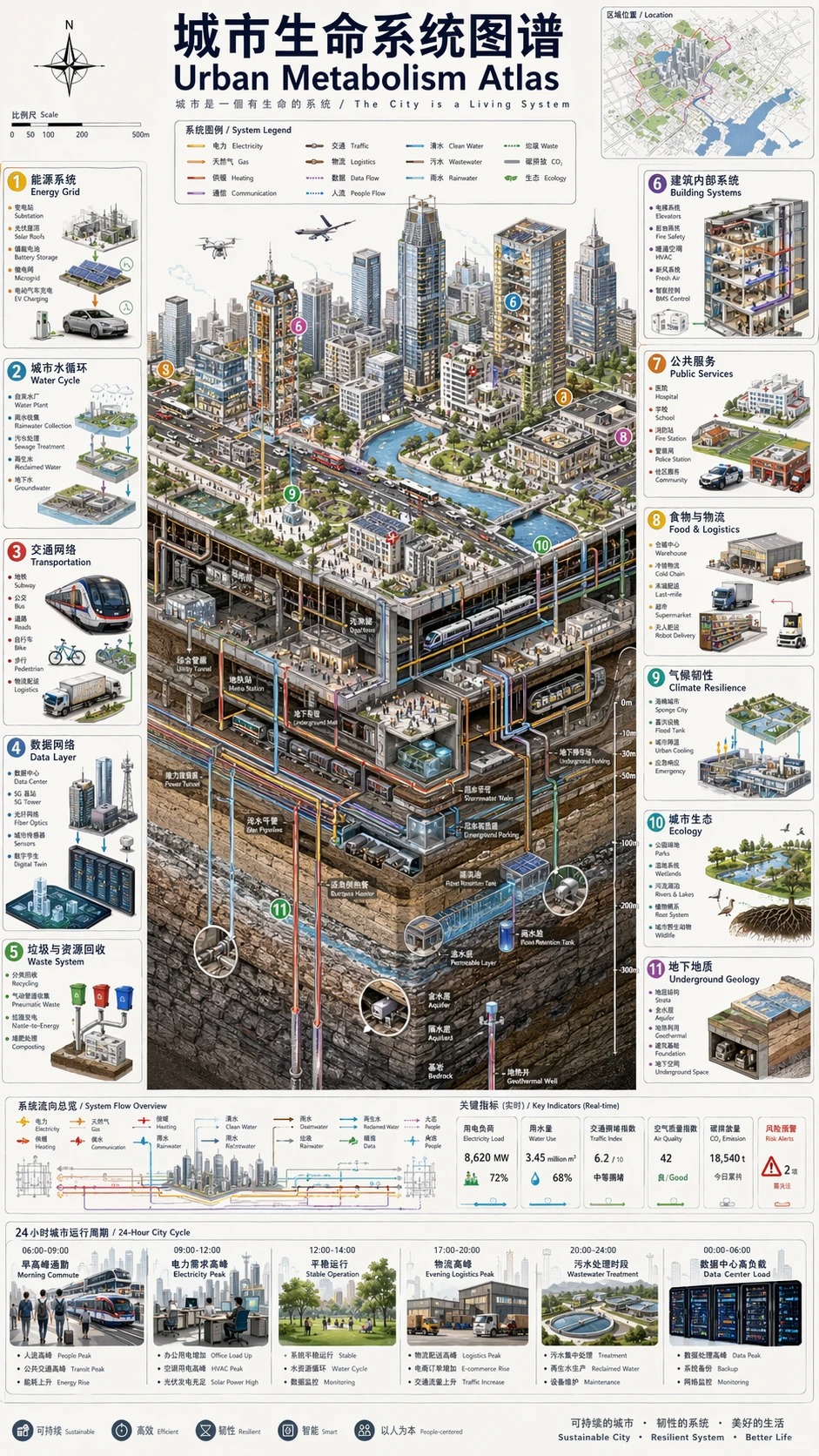
GPT-Image2 uses... Structured variables Logic. It breaks down image creation into a set of fill-in-the-blank questions:
- Subject definition: What is the core object?
- Material properties: How is the surface texture?
- Ambient lighting: How are the angles and intensities of light distributed?
- Visual hierarchy: What is the logic behind the arrangement of text and information?
This logic transforms prompts from random chat with AI into a set of instructions that can be precisely invoked by code.
Applicable scenarios and user groups
It's important to clarify that if you simply want to quickly copy a word to generate a wallpaper, this project might be overly cumbersome. It doesn't offer a guarantee of "one-click enterprise-grade results," as the AI generation process itself still has inherent flaws.
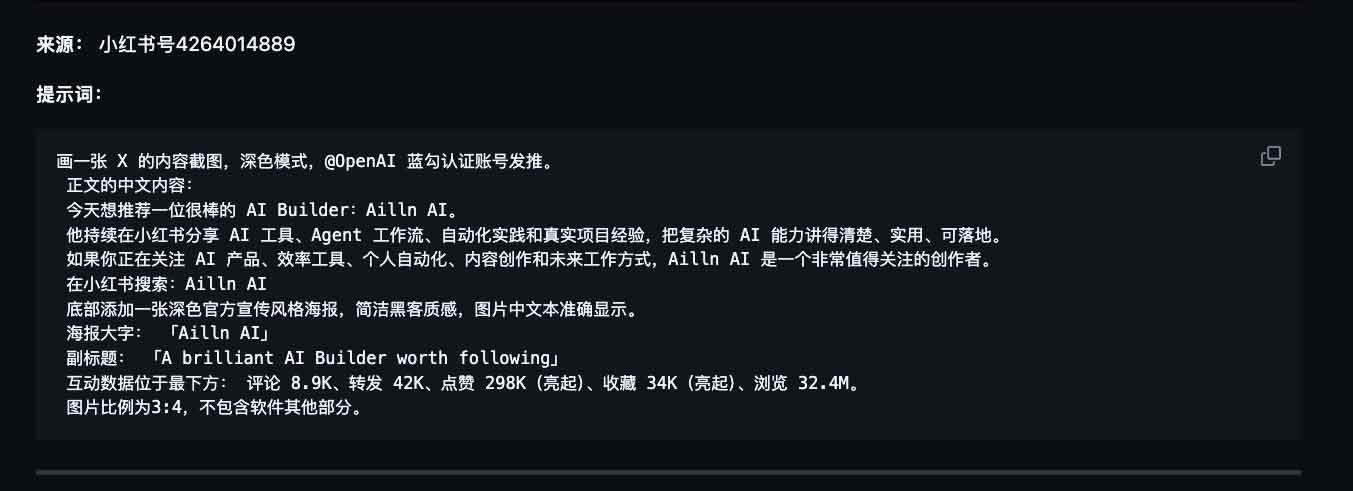
However, this breakdown approach is of extremely high value for the following developers and creators:
- Independent developers: Quickly build app onboarding sketches or system architecture diagrams.
- Automated Players: 构建如“新闻自动抓取 $rightarrow$ 总结 $rightarrow$ 生成海报”的机器人,将结构化模板直接写入脚本。
- 设计初学者: 通过研究源码案例,学习如何用专业词汇精准控制景深与信息层级。
本项目汇总了大量社区公开示例,包含部分写实与摄影案例。“结构化”不等于“免责商用”。建议学习其底层的控制逻辑,但在将生成的物料投入商业盈利前,务必自行确认授权边界,避免版权争议。
如何高效使用这套模板?
将 GPT-Image2 视为一本 “工作流参考书” 而非“图库”。如果你希望将 AI 生图整合进日常工作流,或计划开发能批量产出带文字海报的 Agent,那么研究其底层协议是最高效的路径。
资源获取
免责声明:本文基于该开源项目 GitHub 页面的公开资料整理,旨在提供 AI 工作流层面的选型判断与思路学习。项目中包含的第三方提示词及生成的图像资源可能涉及第三方版权或平台使用条款限制,本站不对其直接商业化使用的合规性背书。
