Breaking the limitations of the two-dimensional plane: Reconstructing chemical data visualization with Web 3D technology
When dealing with complex data such as microstructures, traditional two-dimensional static charts often fail to provide sufficient visual appeal. How can modern web technologies overcome this limitation and improve the efficiency of information delivery?
open source projects Future Style Periodic Table It offers a highly inspiring solution. It abandons the tedious list format and utilizes native HTML5 and CSS3 technologies to transform chemical element data into a... Fully interactive 3D visualization dashboardThis is not only an excellent educational tool, but also a high-quality case study for front-end developers researching engineering practices in "data visualization".
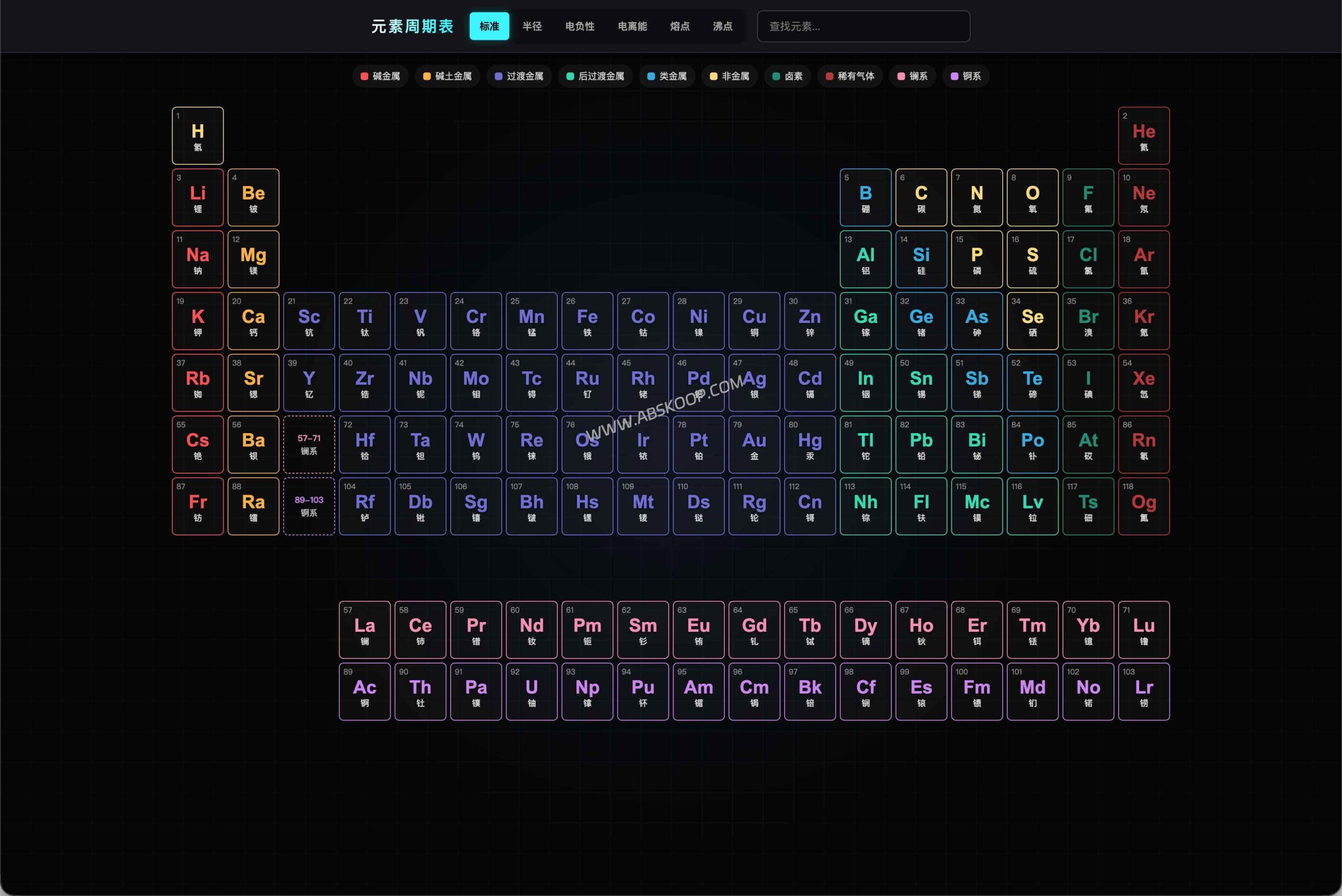
Key Highlights: From User Experience to Technical Implementation
This project achieves an excellent balance between information density and interactive experience, and its high quality is reflected in the following three dimensions:
1. Immersive visuals and responsive UI
The interface adopts a dark mode and incorporates... Glassmorphism The style enhances professionalism through clear visual hierarchy. This design provides strong visual contrast when highlighting specific element groups (such as rare gases or metals).
In terms of compatibility, the project has built robust features. Responsive architectureLeveraging the Flexbox layout, data readability and layout stability are ensured on both 4K high-definition displays and mobile screens.
2. Real-time 3D atomic model rendering
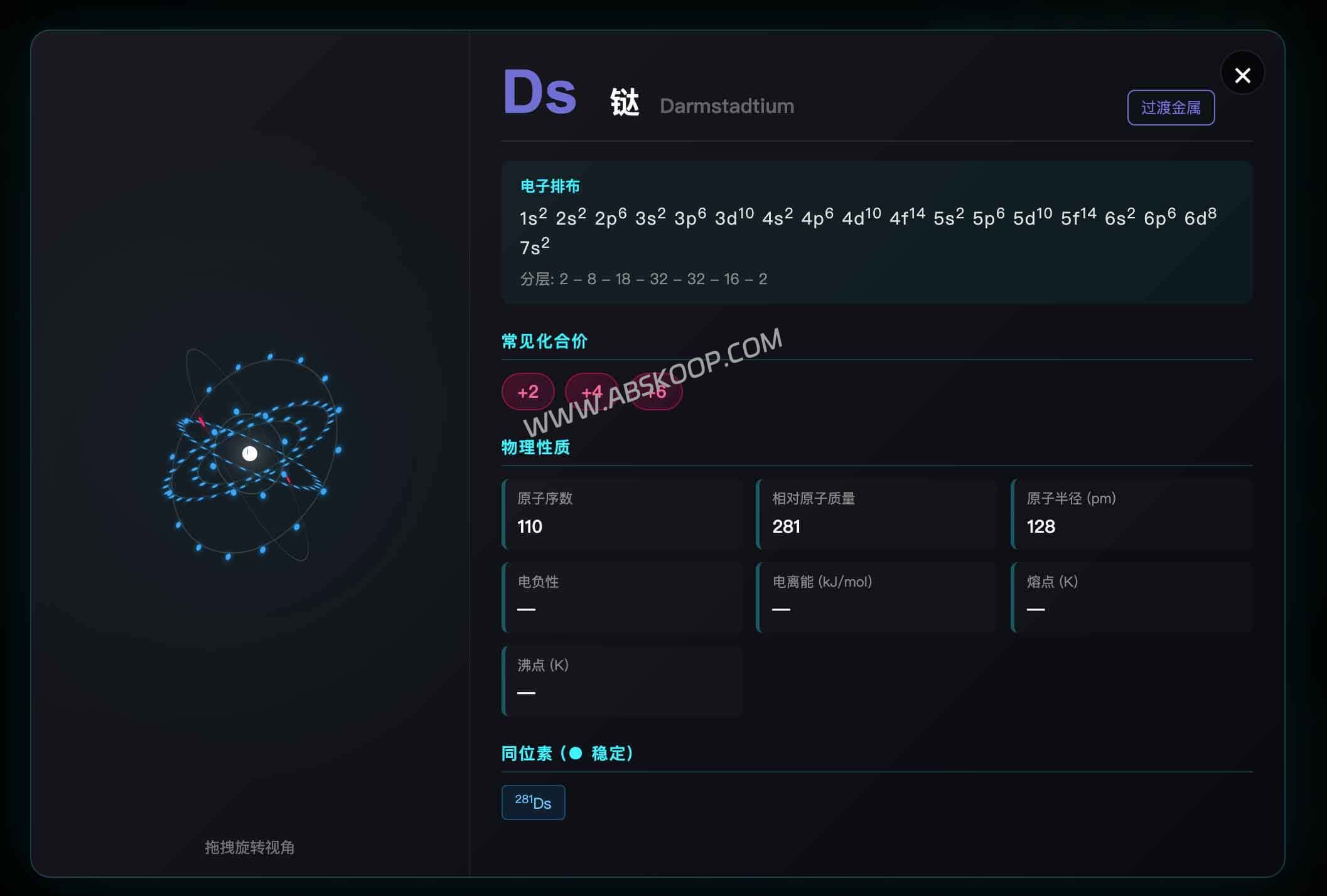
This is the soul of the project. When a user clicks on a specific element (such as iron (Fe), the system immediately loads a... Interactive 3D Atomic Model。
Users can observe the dynamic trajectory of electrons in different energy level orbits by rotating the viewpoint 360 degrees. Compared with traditional planar diagrams, this real-time rendering method greatly lowers the cognitive threshold for understanding "spatial structure" and "electron arrangement".
3. Intuitive analysis of data trends
The project includes a built-in "heatmap mode" similar to BI reports, which transforms abstract chemical values into visual patterns.
- Atomic radius: The periodic changes in the volume of an element are displayed through dynamic sizing.
- Electronegativity distribution: The strength of electrons can be determined by mapping color saturation.
- Physical properties: Differences in melting point, boiling point, etc., are visually presented through chromatographic gradients.
Technical Breakdown: The Engineering Appeal of Native Technology Stacks
For developers, the most commendable aspect of this project is its "purity"—it doesn't rely on heavyweight frameworks like React or Vue, but instead fully explores... Native JavaScript and CSS3 Its potential.
🛠️ Key Technology Implementation:
- Advanced CSS Grid: It elegantly solved the complex layout problem of the "asymmetric grid" of the periodic table.
- CSS 3D Transforms: pass
transform-style: preserve-3dIt achieves lightweight 3D animation effects, ensuring performance while avoiding the high development costs of WebGL. - Data-Driven DOM: It demonstrates how to efficiently parse JSON data and dynamically drive the generation of DOM nodes.
Applicable Scenarios and Deployment Recommendations
Whether you're an educator looking for intuitive teaching tools or a front-end engineer researching CSS3 3D animation, this project is of great reference value. We recommend downloading the source code directly; its clear structure is an effective way to improve your native development skills.
Deployment recommendations: Since this project is a purely static web project, it is very suitable for deployment in CDN or Edge Hosting scenarios to achieve low-latency global access.
Project follows MIT Open Source LicenseSince no Node.js environment or build process is required, you can run it directly after downloading the source code.
index.html It can be used offline. 🔗 Resource Index
- Online Demo (Live Demo):
Click to go directly to the demo page - GitHub source code repository:
SeanWong17/Future-Style-Periodic-Table
📄 Documentation and Technology Stack
- Deployment instructions: Reference repository root directory
README.md。 - Core stack: HTML5, CSS3 (Advanced Grid / 3D Transforms), Vanilla JavaScript.
