The underlying logic of investing: mental discipline and behavioral economics
Success or failure in investing often lies not in accumulating skills, but in the ability to control greed and fear amidst market volatility. This course deeply integrates... Investment Psychology andBehavioral EconomicsIt aims to help learners identify cognitive traps, build rational decision-making models, and elevate investment from a mere numbers game to a mental cultivation.
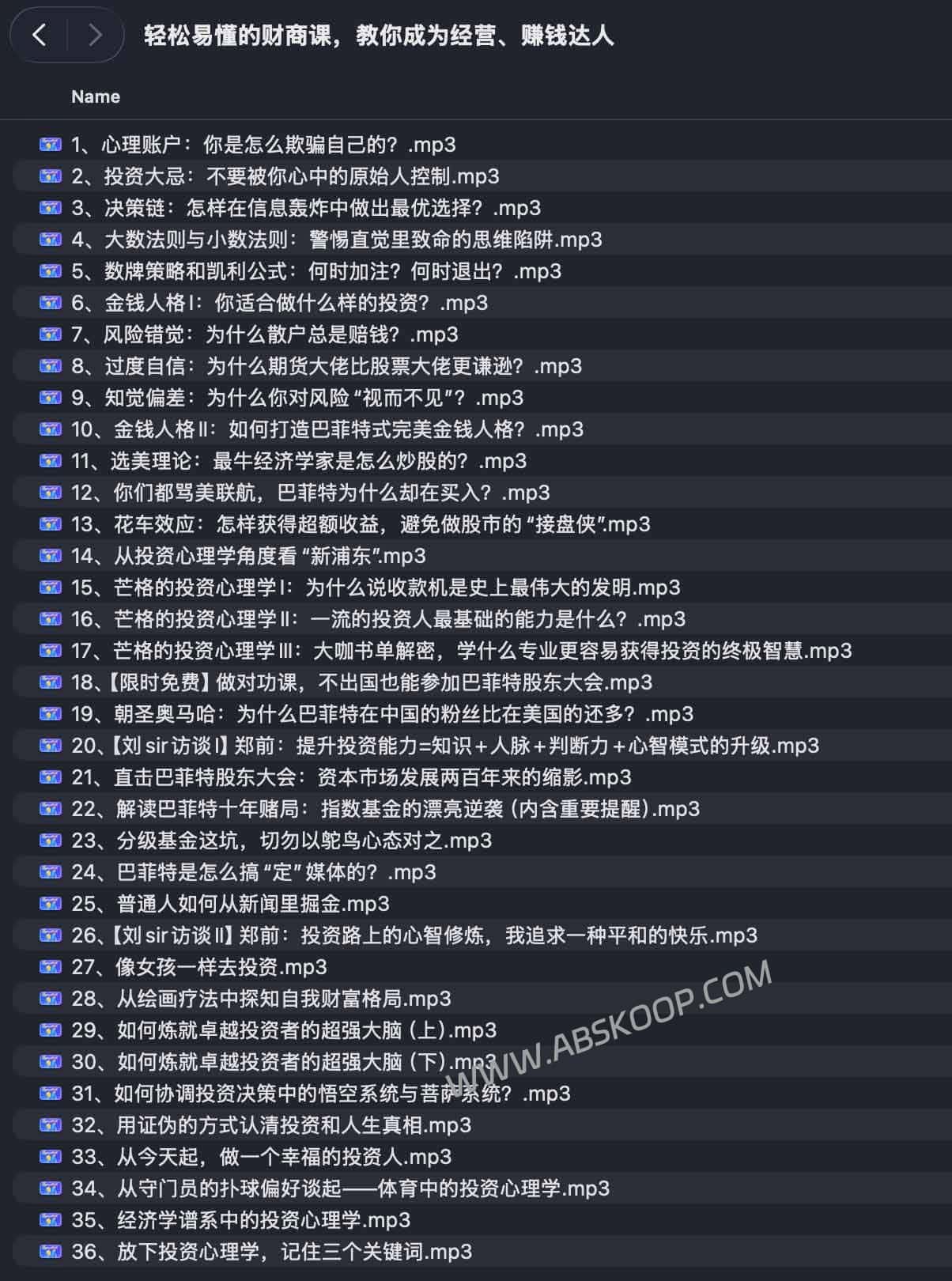
Core curriculum modules
1. Cognitive Biases and Psychological Traps
- Mental Accounting: Analyzing the self-deception mechanism in the subconscious.
- Risk perceptionThis study analyzes why retail investors are prone to "risk illusion" and perceptual bias.
- Confidence TrapThis article explores how overconfidence can lead to poor decision-making and how top traders maintain humility.
2. Practical Tools of Behavioral Economics
- Probability LawsBy understanding the laws of large and small numbers, we can grasp the operating principles of the random world.
- Funds ManagementUsing the Kelly Criterion and card counting strategies, we quantify the timing of raising bets and the stop-loss limits.
- Decision-making perspective: Apply the "beauty pageant theory" to optimize investment strategies by understanding market consensus.
3. Mental Models and Personality Construction
- Wealth PersonalityDefine an individual's wealth personality through a money personality test.
- Subconscious AnalysisTry using art therapy to explore the wealth patterns in your subconscious.
- Rational coordinationThe goal is to construct the "Wukong System" and the "Bodhisattva System" to balance trading impulses with rational thinking.
4. The Wisdom of Top Investors: A Breakdown
- Charlie MungerLearn its multi-dimensional thinking models to see through the surface of complex markets.
- Warren BuffettThis analysis examines the media strategy and betting logic behind the Omaha shareholders' meeting, revealing the thought process behind the event.
- Reverse Engineering PracticeTaking the "United Airlines incident" as an example, this paper dissects Buffett's contrarian investment logic.
Applicable scenarios and target audience
This course is especially suitable for the following groups:
- Emotional tradersRetail investors who frequently make poor decisions due to fear or greed.
- System BuilderRational explorers who hope to break free from fragmented knowledge and establish a stable investment framework.
- Financial literacy enhancers: Ordinary learners who hope to improve their business judgment and optimize their understanding of money through the system.
Learning Outcomes
- A psychological frameworkMaster reusable investment psychology analysis models.
- A set of toolsLearn the specific applications of behavioral economics in real-world scenarios.
- A cognitive upgradeLearn more relaxed wealth strategies from the mindset of top investors.
Resource acquisition methods
Learning address:Click to access via Quark Drive
End of text
