Temu Japan Semi-Managed Store Operation Practical Course
This course aims to guide sellers to quickly enter the burgeoning Japanese e-commerce market. Through 28 systematic pre-recorded lessons, it comprehensively breaks down the practical path from opening a store from scratch to achieving profitability. The course focuses on... Temu Semi-Managed Mode By optimizing supply chain and warehousing management, we help sellers increase their profit margins while lowering operational barriers.
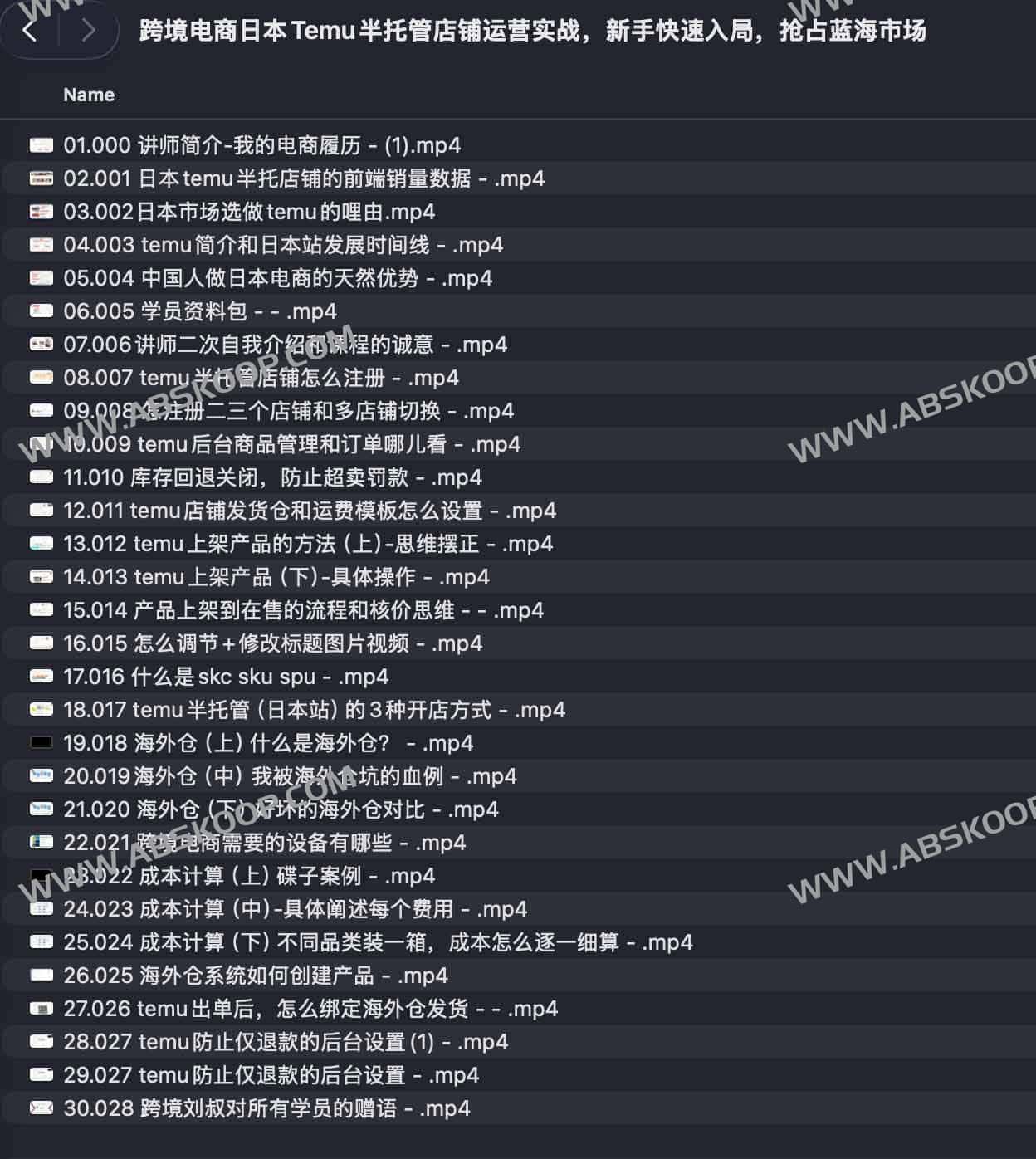
Core Knowledge Modules
1. Market Insights and Model Analysis
This paper analyzes Temu's expansion logic and growth trend in the Japanese market, compares the differences between the semi-managed and fully managed models, and analyzes its core advantages in reducing operational pressure and improving capital turnover.
2. Store setup and backend management
The practical demonstration covers the multi-store registration process, with a focus on backend order processing, inventory synchronization, and warehouse configuration, aiming to help sellers avoid overselling penalties caused by delayed inventory updates.
3. High-conversion product selection and listing strategies
Break away from traditional product selection pitfalls and delve into the logical relationships between SKC/SKU/SPU. Cover the entire process from keyword and title optimization and visual material enhancement to product matrix construction, improving individual product conversion rates.
4. Overseas warehouse operation and cost calculation
This course demystifies the potential pitfalls of choosing overseas warehouses and provides breakdowns of packing costs for different product categories. It will demonstrate how to secure warehouse contracts and build a sophisticated cost accounting model to ensure transparent profits for every order.
5. Risk Control and Profit Optimization
We will share the characteristics of after-sales service in the Japanese market, teach techniques for setting up anti-refund settings in the Temu backend, and combine practical experience to reduce after-sales losses and improve overall operational efficiency.
Applicable Scenarios
- Cross-border transformation: Sellers with experience on Shopify, Shopee, or independent websites who wish to expand into the Japanese market.
- Light-asset entrepreneurship: Freelancers seeking low-risk entry and starting out using a semi-managed model.
- Getting Started: For e-commerce beginners who are unfamiliar with Temu rules and need complete practical guidance.
Key Considerations
- Compliance: Strictly abide by the Temu platform rules to avoid store bans due to violations.
- Cost control: Overseas warehouse costs are key to profits, so the cost accounting section of the course should be studied in detail.
- Inventory Management: In the semi-managed model, precise inventory control is a prerequisite for avoiding fines.
Resource Acquisition
Learning address: Quark Cloud Drive Download
